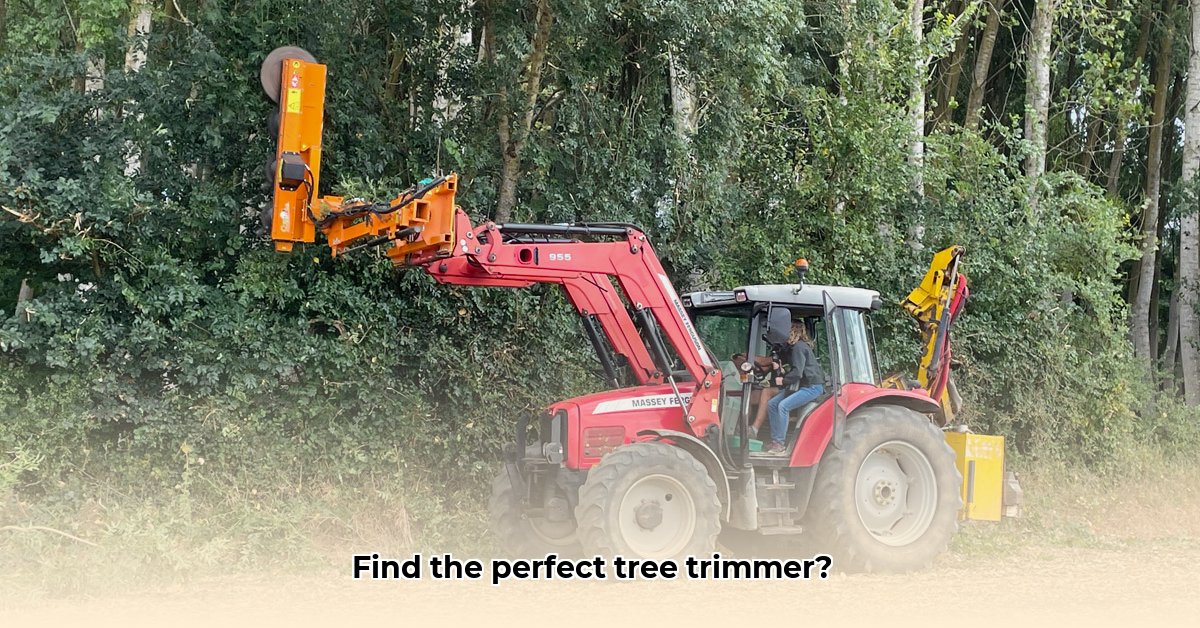
Maintaining roadside and field vegetation requires efficient tree removal. This guide compares two leading tractor-mounted tree trimmers—the LimbShark rotary cutter and the CVR disk cutter—to help you choose the best option for your needs. We'll analyze features, costs, and ideal use cases, ultimately empowering you to make an informed decision. For more on tractor equipment, check out this helpful resource on tractor mounted sprayers.
LimbShark Rotary Cutter: Speed and Precision for Smaller Trees
The LimbShark rotary cutter excels at swiftly clearing smaller trees and brush. Its high RPM and torque efficiently handle vegetation up to 3 inches in diameter.
Power Requirements: Requires a tractor or skid steer with an 8-30 gallon-per-minute (GPM) hydraulic system. (This is the rate at which the hydraulic fluid flows—essential for powering the cutter.)
Cutting Capacity: Highly effective for smaller diameter trees and dense brush.
Construction: Durable construction for long-term use; backed by a one-year warranty.
Pros:
- High speed and efficiency for smaller vegetation.
- Versatile for various right-of-way tasks.
Cons:
- Limited to trees up to 3 inches in diameter. (Larger trees will severely strain the machine and potentially cause damage.)
- Dependent on a compatible tractor with sufficient hydraulic power. (This limits its use unless you have appropriate equipment.)
CVR Disk Cutter: Power and Efficiency for Larger Trees and Dense Areas
The CVR disk cutter is built for larger projects and tougher vegetation. Its robust design handles trees up to 8 inches in diameter with ease, making quicker work of extensive clearing jobs.
Power Requirement: Attaches directly to a tractor's loader bucket, eliminating the need for a separate hydraulic source. (This simplifies setup and reduces initial cost.)
Cutting Capacity: Ideal for larger trees and dense vegetation. (Quickly clears larger areas compared to rotary cutters.)
Construction: Heavy-duty steel construction; however, the 60-day warranty highlights a higher anticipated need for repairs.
Pros:
- Handles larger trees effectively.
- Easy integration with existing loader equipment.
- Cost-effective for large-scale clearing projects. (Efficiency translates to faster return on investment.)
Cons:
- Inefficient for smaller trees and brush. (Overkill for smaller jobs.)
- Higher initial cost compared to the LimbShark.
Comparative Analysis: LimbShark vs. CVR
This table summarizes the key differences between the LimbShark and CVR cutters:
| Feature | LimbShark Rotary Cutter | CVR Disk Cutter |
|---|---|---|
| Maximum Tree Diameter | Up to 3 inches | Up to 8 inches |
| Power Source | Tractor Hydraulics | Loader Bucket Attachment |
| Cutting Speed | Very Fast | Fast |
| Typical Maintenance | Moderate | Moderate |
| Warranty | 1 Year | 60 Days |
| Best Use Cases | Smaller trees, brush | Larger trees, dense areas |
Considering your budget, wouldn't it be beneficial to analyze your typical vegetation size before buying? The answer to this question will strongly influence your choice.
Choosing Your Tree Trimmer: A Step-by-Step Guide
Assess Your Needs: Determine the typical size of trees and the density of vegetation in your right-of-ways. How much area needs clearing?
Evaluate Your Equipment: Confirm if your tractor meets the hydraulic requirements for the LimbShark or if it has a compatible loader for the CVR.
Budgeting: Consider both the upfront cost and ongoing maintenance expenses for each machine. The LimbShark is likely more affordable initially, but the longer warranty on the LimbShark suggests lower long-term maintenance costs.
Prioritize Safety: Always follow manufacturer instructions and wear appropriate safety gear. (Protective eyewear, hearing protection, and sturdy work clothing are essential.)
Safety and Regulatory Considerations
Operating heavy machinery requires caution. Always:
- Wear appropriate safety gear (eye protection, hearing protection, and sturdy clothing)
- Follow the manufacturer's safety instructions
- Adhere to all local and national regulations concerning tree cutting and equipment operation.
Conclusion
The LimbShark and CVR cutters offer distinct advantages. The LimbShark excels at speed and precision for smaller vegetation, while the CVR provides unmatched power for larger trees and extensive clearing projects. Careful consideration of your specific needs—tree size, budget, and existing equipment—is crucial for selecting the right tool for efficient and safe row maintenance. Remember to always prioritize safety.